

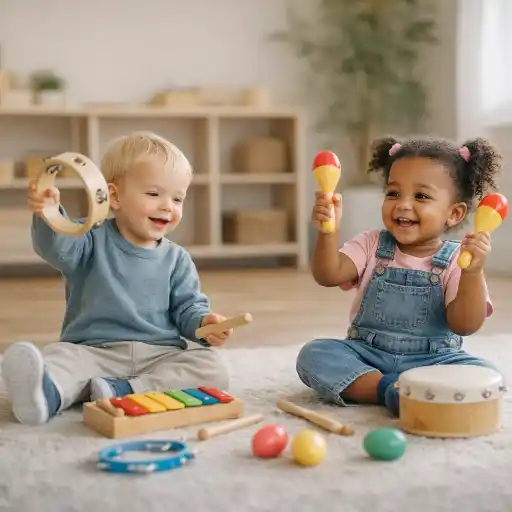
Long before children learn to read independently, they begin developing the listening and language skills that make reading possible. Recognizing sounds, remembering sequences, identifying patterns, and understanding spoken instructions are all important parts of early literacy development. Music and movement provide an engaging way to practice these abilities because they combine language, sound, repetition, and physical activity. Through songs, rhythmic games, and movement exercises, young children can strengthen foundational skills while participating in activities that feel natural and enjoyable.
For families exploring Transitional Kindergarten in Campbell CA, the role of music and movement in early education is worth considering. A well-rounded transitional kindergarten experience should provide opportunities for children to develop phonological awareness, vocabulary, listening comprehension, and communication skills alongside foundational academic concepts. Music-based activities can contribute to this process by turning abstract language patterns into experiences children can hear, repeat, and physically explore.
Why Music Plays an Important Role in Early Literacy
Early literacy involves more than recognizing letters and memorizing words. Children must first understand how spoken language works, including the sounds within words, the rhythm of sentences, and the relationship between sounds and meaning.
Music naturally supports several of these abilities. Songs expose children to repeated words, rhyming patterns, syllables, and changes in pitch. Listening carefully to lyrics also encourages them to recognize familiar vocabulary and anticipate what comes next.
Repetition is particularly valuable during early childhood. When children sing the same song several times, they become more familiar with its vocabulary and sound patterns. This familiarity can make it easier to recognize rhyming words, identify individual sounds, and remember new expressions.
Practical Music and Movement Activities for Young Learners
1. Use Rhyming Songs to Develop Phonological Awareness
Nursery rhymes and simple action songs introduce children to the sound structure of language. Repeated rhyming patterns help them notice similarities between words, an important foundation for later reading development.
Teachers can pause before the final word of a familiar rhyme and invite children to complete the line. Another activity involves asking children to identify words that sound alike.
These exercises encourage active listening rather than passive participation. Children begin paying attention to how words sound, not just what they mean.
2. Introduce Clapping and Syllable Games
Rhythm activities offer a practical way to help children recognize syllables. Teachers can say familiar words and ask children to clap once for each syllable.
For example, children might clap twice for “apple” and three times for “banana.” Their names can also be used to make the activity more personal and engaging.
This exercise develops sound awareness while reinforcing listening accuracy, word recognition, and coordination. It also provides a simple introduction to breaking longer words into smaller sound units.
3. Play Musical Listening Games
Listening games help children distinguish between sounds and respond to specific instructions. A teacher might play a short musical pattern on a drum and ask children to repeat it using their hands or feet.
Another option is a stop-and-go movement game. Children move while music plays and freeze when it stops. More advanced versions can introduce changes in tempo, volume, or rhythm.
These activities encourage children to listen for details, recognize changes, and control their responses. Such abilities are useful when following classroom instructions and participating in group learning.
4. Combine Storytelling With Songs and Actions
Music can make storytelling more interactive. Teachers may introduce songs that describe characters, animals, weather, or everyday experiences. Children can use gestures and movements to represent different events in the story.
For example, a song about a growing garden might include actions for planting seeds, watering plants, and watching flowers bloom.
This approach supports vocabulary development, sequencing, and comprehension. Children connect spoken words with physical actions, helping them understand and remember the meaning of new language.
How Movement Supports Listening and Communication
Physical movement adds another dimension to early literacy activities. When children respond to verbal directions through actions, they practice processing spoken information and translating it into appropriate responses.
Activities such as action songs, dance sequences, and movement-based storytelling can strengthen:
- Auditory attention: Recognizing and focusing on important sounds.
- Listening comprehension: Understanding spoken words and instructions.
- Memory: Remembering lyrics, rhythms, and movement sequences.
- Vocabulary: Connecting new words with actions and experiences.
- Self-regulation: Pausing, waiting, and responding at the appropriate time.
These skills contribute to classroom readiness and help children participate more confidently in conversations and collaborative activities.
Important Considerations When Planning Music Activities
Not every child responds to music in the same way. Some enjoy singing in front of a group, while others prefer listening, clapping, or participating through movement. Educators should provide different ways to engage without requiring every child to perform publicly.
Activities should also be developmentally appropriate. Short songs, simple rhythms, and familiar vocabulary generally work well for younger learners. As children’s abilities develop, teachers can introduce more complicated patterns and longer sequences.
Volume and sensory preferences deserve attention, too. Loud instruments or sudden changes in sound may overwhelm some children. Keeping music at a comfortable level and offering quieter alternatives creates a more inclusive learning environment.
Families interested in learning more about the educational setting can find the school location on Google Maps and discuss its approach to music, movement, and early literacy during a visit.
Common Questions About Music and Early Literacy
Does listening to music improve reading skills?
Music alone does not teach children to read. However, activities involving rhyming, rhythm, sound recognition, and vocabulary can strengthen foundational abilities that support reading development.
How often should children participate in music activities?
Short, regular sessions can be incorporated into daily classroom routines. Morning meetings, transitions, storytelling, and movement breaks are all suitable opportunities.
Do children need musical instruments?
No. Clapping, tapping, singing, and using everyday objects as simple rhythm tools can provide meaningful learning experiences.
Making Music Part of Everyday Learning
Music, rhythm, and movement offer practical ways to develop the listening and language abilities children need before formal reading instruction begins. Through rhymes, sound games, action songs, and interactive storytelling, educators can make early literacy experiences engaging and accessible. When these activities become a consistent part of classroom life, children gain repeated opportunities to strengthen communication, attention, memory, and confidence as developing learners.

