

Key Takeaways
- Automation and AI are transforming feed mill operations by improving efficiency and ensuring consistent output.
- Strategic acquisitions and facility expansions are driving growth and strengthening supply chain reliability in the feed mill sector.
- Sustainability initiatives are now at the core of modern feed mill practices, driving innovation and reducing environmental impact.
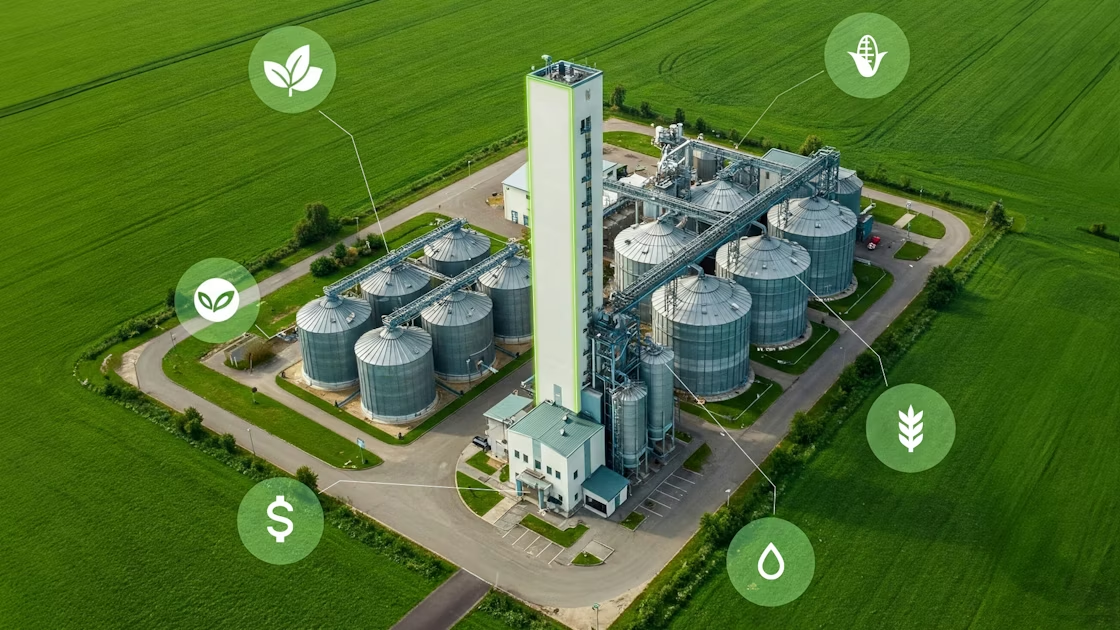
Across today’s fast-paced agricultural sector, feed mills serve as the backbone for animal nutrition and the food supply chain. To support the growing demand for reliable, sustainable animal feed, modernizing feed mill supply chains has become essential. Advances in technology, strategic partnerships, and a growing focus on sustainability are reshaping how feed mills operate. Cruco Mill & Industrial Supply feed mill suppliers are supporting this transformation by providing specialized equipment and parts required for updated operations, directly impacting how feed mills can innovate and stay competitive.
The current evolution in animal feed production focuses on efficiency and responsible resource use to support a growing livestock industry. This includes faster processing, improved supply chain transparency, and partnerships with industry experts for timely upgrades. Recent trends reflect a commitment to modernization via acquisitions, automated designs, and digital logistics tools. Additionally, consumer awareness and agricultural regulations are prompting companies to prioritize transparent sourcing, resource conservation, and clean technologies, positioning feed mills as crucial elements of a sustainable food system.
Automation and AI Integration
Automation and artificial intelligence (AI) tools are rapidly changing the fundamental operations within feed mills. Traditionally, labor-intensive processes, such as dosing ingredients, mixing formulas, and pelleting, are now subject to rigorous, data-driven optimization. Automation reduces manual errors and supports continuous operation, while AI analyzes production data in real time to adjust output and improve quality. These advancements allow feed mills to adapt nimbly to fluctuations in supply, customer specifications, and ongoing maintenance needs.
One of the most significant values of AI integration is predictive maintenance. By monitoring equipment with sensors and predictive analytics, feed mills can resolve issues before they escalate, leading to less downtime and greater throughput. Automated report generation and inventory tracking also help mill managers optimize input purchases and scheduling, freeing up staff to focus on strategic decisions. AI-driven supply chains are a critical ingredient in the next generation of agricultural infrastructure, elevating the role and reliability of feed mills in the broader food ecosystem.
Strategic Acquisitions and Expansions
As demand for animal protein continues to expand globally, leading feed producers are investing heavily in new sites, facility upgrades, and strategic acquisitions. These moves are designed to strengthen their market reach and ability to supply feed where and when it is needed most. A prominent example came in September 2024, when Cargill acquired two significant feed mills from Compana Pet Brands in Denver, Colorado, and Kansas City, Kansas. This acquisition is intended to boost Cargill’s production and distribution capabilities, reinforcing its ability to serve both large and small-scale livestock producers.
Other firms are focused on deepening their roots in key agricultural regions. Wayne-Sanderson Farms, for example, invested $25 million to renovate its feed mill in Mocksville, North Carolina. The result is a facility now capable of producing up to 4,500 tons of feed weekly, empowering over 140 family farms with reliable, high-quality nutrition. These investments not only improve supply reliability but also contribute to the stability and growth of rural economies.
Sustainable Practices and Technologies
Sustainability is shaping the modern feed mill at every level, from ingredient sourcing to energy consumption and emissions management. Many companies are making strategic decisions to cut resource use, lower emissions, and improve circularity in their operations. For instance, Forever Feed Technologies is developing an enterprise-scale facility in Hanford, California, to produce Automated Sprouted Grain (ASG) year-round. This technology not only enhances animal nutrition but also delivers significant savings in water, fuel, and land use.
Eco-friendly innovations extend to packaging materials, transport logistics, water recycling, and renewable energy deployment. Feed mills are adopting energy-efficient motors, solar panels, and heat-recovery systems to minimize their carbon footprint. Transparent ingredient sourcing, efficient waste handling, and traceability tools are ensuring a reduction in both operational impacts and supply chain vulnerabilities. Current sustainability performance metrics, championed by organizations like the Feed Strategy Sustainability Initiative, are helping industry stakeholders better measure and communicate their efforts to customers and regulators alike.
Conclusion
The landscape of feed mill supply chains is being redrawn through a combination of technology-driven efficiency, strategic market maneuvers, and a deepening commitment to sustainability. As animal agriculture continues to evolve, the modernization of feed mills will be pivotal in supporting global food security and environmental stewardship. By leveraging advanced digital tools, expanding capabilities through investment, and prioritizing eco-friendly practices, feed mills are setting the stage for a resilient, responsible, and innovative industry future.

