

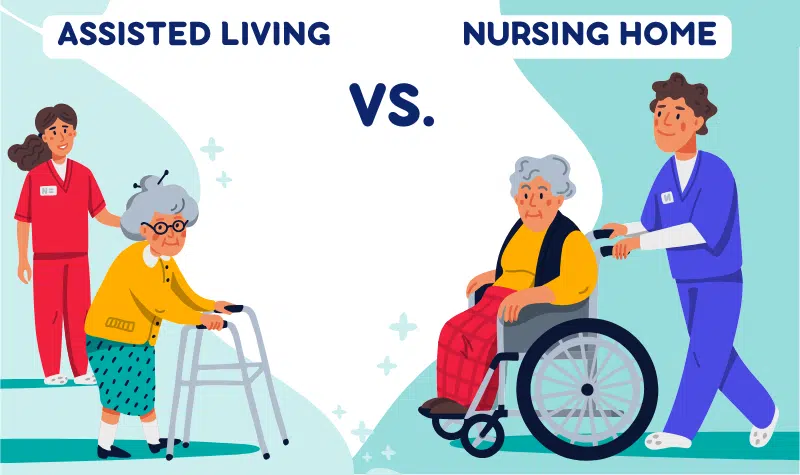
Families often face challenging decisions when elderly relatives require additional care and support. The transition from independent living becomes necessary when daily activities become difficult or health conditions require professional attention. Many people struggle to determine the appropriate level of care needed for their loved ones.
Each person’s health status, mobility level, and social requirements vary significantly. The assisted living vs nursing home decision requires careful consideration of multiple factors that affect both residents and their families. This blog explores the essential differences between these care options to help families identify the most suitable choice.
Level of Medical Care Required
Assisted living facilities provide basic health monitoring and medication management while allowing residents to maintain independence in daily activities. Staff members offer assistance with tasks like bathing, dressing, and meal preparation when needed. Medical care typically involves coordination with external healthcare providers rather than on-site medical supervision. Residents receive skilled nursing services, physical therapy, and specialized treatments for chronic conditions. The medical model focuses on managing complex health issues that require professional intervention and monitoring.
Independence and Personal Autonomy
Residents in assisted living environments maintain significant control over their daily schedules and personal choices. Private or semi-private apartments allow individuals to bring personal belongings and maintain familiar routines. Social activities and dining options offer a structured environment while preserving personal freedom and dignity. Residents typically share rooms and follow facility schedules for meals, activities, and treatments. The structured environment ensures proper medical attention but reduces individual flexibility in daily decisions.
Physical and Cognitive Assessment Factors
Assisted living serves individuals who need minimal help with activities of daily living but remain largely independent. Residents should be able to walk with or without assistance and communicate their needs effectively. Memory issues may be present, but should not pose safety risks that require constant supervision. Individuals who cannot safely perform basic functions like eating, toileting, or moving around independently benefit from the higher level of supervision. Severe dementia or other cognitive disorders that affect judgment and safety often necessitate nursing home placement.
Social Environment and Community Life
The social atmosphere in assisted living communities resembles apartment-style living with organized activities and social opportunities. Residents maintain friendships, participate in group outings, and enjoy restaurant-style dining experiences. Common areas encourage interaction while private spaces provide solitude when desired. Interaction occurs mainly during scheduled activities or meal times in shared dining areas. The environment prioritizes health and safety over social engagement and personal relationships.
Financial Considerations and Coverage
Assisted living costs are typically paid through private funds, long-term care insurance, or veterans’ benefits for eligible individuals. Medicare does not cover assisted living expenses, making it important for families to plan financially for these services. Monthly fees vary based on location, amenities, and level of care required. Nursing home expenses may be covered by Medicare for short-term rehabilitative stays or Medicaid for long-term care when financial qualifications are met. The higher level of medical care justifies increased costs compared to assisted living options.
Timing and Transition Considerations
The decision between an assisted living vs nursing home often depends on the timing of when care becomes necessary. Early intervention with assisted living can help individuals maintain independence longer while receiving needed support. Regular assessments help determine when additional care levels become appropriate. Nursing home placement typically occurs when assisted living can no longer meet medical or safety needs. Some individuals transition from assisted living to nursing care as health conditions progress.
Distinguishing between assisted living and nursing home needs requires careful evaluation of medical requirements, independence levels, and long-term care goals. Each option serves different populations with varying degrees of health challenges and support needs. It is essential for families to assess individual circumstances when making care decisions that will affect quality of life and wellbeing of their loved ones.

